
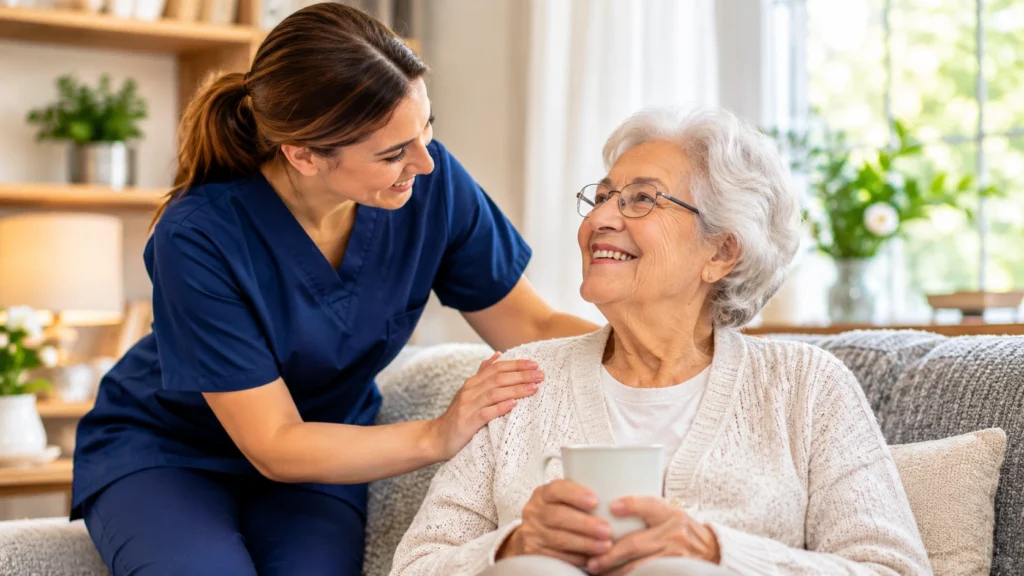
When this happens, physical function, lifestyle, and needs change. Yet, that doesn’t mean older adults can’t stay in their homes. Many seniors want to remain in the place where they are comfortable, where they can feel safe, and where they can retain their independence the place that is known as home. Through home care, seniors can stay in the home they love.
Home care provides one-to-one assistance with daily activities, personal care, household chores, and companionship. There is no need for your loved ones to move into a care home and face a new environment. Instead, they can enjoy the familiarity of home whilst benefiting from the reassurance of caring support and peace of mind.
What Does Aging in Place Mean for Seniors?

Aging in Place is the ability to continue living in one’s own home, rather than moving to an assisted living facility or nursing home. Aging in place enables older adults to have control of their habits, social interactions, and surroundings.
A home means a lot of things to most seniors: priceless history, a treasure chest of love, a sense of freedom, just to name a few. Doing so may make the daily living experience easier, particularly for those facing physical changes and limitations due to age. But staying home comes with some challenges.
This is when experienced home care can be effective. Caregivers can give the assistance needed for your loved one while keeping them active and involved in their lives. The amount of support can even increase and decrease as needs evolve, making aging in place more viable.
How Home Care Supports Seniors Aging in Place
With Aging-in-Place Support in Chandler, older adults can manage daily challenges while maintaining their independence. Professional caregivers provide personalized assistance based on individual needs and preferences, helping seniors stay safe, comfortable, and independent at home.
1. Assistance With Daily Living Activities
Things as basic as taking a bath, dressing, grooming, going to the toilet, walking through the house, and other day-to-day activities may become difficult.
Home caregivers can assist seniors with these important activities in a private, gentle, and respectful way. Activities such as dressing, grooming, bathing, or getting ready for bed are no problem for home care professionals.
This support helps the elderly continue their routine without becoming overwhelmed and not being able to carry on by himself. Caregivers can prompt the elderly to do what they are still able to do.
2. Promoting Safety and Preventing Falls
Falls are common in older people, especially those with balance problems, poor mobility, or weak muscles. A simple fall can cause an injury that can affect your confidence and your ability to live independently.
Here are some other ways a caregiver can help: assist with safe room-to-room transfers, help seniors stand and sit, and point out hazards in your living environment. Caregivers can even promote basic safety measures like getting rid of loose rugs, keeping walkways unobstructed, and increasing lighting.
Providing this support, such as help with transfers, can prevent some of the day-to-day hazards. While home care cannot prevent all potential hazards, it can help prevent a variety of accidents.
3. Preparing Nutritious Meals and Supporting Healthy Habits
As people age, it’s crucial to stay energized, strong, and healthy, and proper nutrition can provide the way. The problem is, grocery shopping, food prep, and cleanup can be a lot of work.
A caregiver may assist with planning and preparing meals, shopping and organizing, as well as establishing regular eating times. Special dietary considerations may also be accommodated based on directions provided to the caregiver.
By cooking regularly, elders can consume healthier meals without having to handle the entire process on their own. Caregivers can also encourage them to stay well-hydrated or follow a set schedule.
4. Providing Companionship and Emotional Support
Feeling lonely: Facing loneliness as an older person can sometimes have a major impact on one’s life if they tend to live alone or are no longer active due to health issues. Death of friends, mobility issues, or family members living far away can make people less social.
Senior companion care provides conversation, interaction, and meaningful companionship for older people. The carer might read books with the senior, go for walks, play games, discuss hobbies or interests, or just have a chat.
Engaging and interacting can bring joy to the day and maintain the feeling of connectedness. Emotional support is equally as valuable in promoting health and holistic well-being, as is an extra home help service.
Maintaining Senior Independence at Home
Assisted home care keeps the decision-making in the hands of the senior, instead of robbing it from them. Most seniors wish to control decisions about the things they do on a given day and how they go about doing them. Those decisions and actions should belong to the person.
For example, the elderly can make a snack or choose what to wear but may require help with taking a shower or washing the car. You can assist with a few of the difficult tasks but enjoy participating in the simple tasks.
This process builds up confidence and keeps the aged person active. We also want to honor independence in our homes, which is part of valuing the gifts of freedom and not being strung down by over-dependence.
The Function of In-Home Care for Elderly Persons in Family Support
Many family members care for their aging parents or other family members. Taking care of your loved ones can be gratifying, but balancing the needs of the caregiver, work, housework, and family can be overwhelming.
In-Home Care for the Elderly that is Professional: Should you decide to seek in-home care for your elderly parent or loved one, you can share the responsibilities with a professional home care caregiver. These care schedules may range from just a few hours per week to daily visits and services.
This method has numerous advantages:
Reduced stress: Family can take a break and relax or take on other things.
Ongoing support: Seniors are supported daily.
More quality family time: Family members can relax and spend quality time together rather than having to take care of everything. The hours of care are flexible. Changes to hours of care can be made to suit changing needs. You know there is another person around to take care of the family’s previously agreed routine.
Getting professional help is no replacement for being with your loved ones. It allows your loved ones to be engaged without doing everything themselves.
Aging in Place Support Services That Make Daily Life Easier
Seniors have different types and degrees of care needs. For example, some may require help with homemaking tasks, while others need daily mobility and personal support. Aging in Place Support Services are based on a client’s needs and preferences and the physical environment of the client’s home.
Regular services consist of the following:
Personal Care: Assistance with dressing, bathing, grooming, and other personal activities. B. Meal preparation: Assistance with preparing meals.
Light chores: Help with laundry, take out trash cans, wipe and sweep floors, plan menus weekly, straighten closets, and clean and clear counters in the kitchen and bathroom.
Food preparation: Preparing or having food prepared in the style of your choice.
Transport aid: Assisting in getting to appointments, to the shops, and to community events.
Friendship: socializing, social engagement, and emotional support.
Assistance in planning your time and completing your daily tasks.
Some home care companies also offer specialty care options depending on the services provided and the certification of the home caregivers. Talk to the company about your family’s specific needs before committing, especially if you require skilled nursing or medical care.
Benefits of Home Care for Seniors
Advocates of home care highlight the potential to enhance the everyday senior lifestyle for the active with an integrated approach to help and care. If they want to get up, they don’t have to be up just because everyone else is.
Personalized Attention
A care plan is tailored to include the abilities, choices, lifestyle, and daily routine of an older person. This provides carers with the support they need to aim for.
Ease and familiar environment
Being home means staying in the furniture you cherish, your possessions, your community, and your routine. Being comfortable in your own home could mean that some of the minor changes to your daily routine will be easier to handle.
Greater Control Over Daily Decisions
Older adults can have greater consistency and control in their days when they get up, what they eat, and how they spend their time. Caregivers help without putting personal routines through drastic changes.
Varying Degrees of Assistance
A care arrangement may change over time. A senior who starts out needing help around the house may find that she needs more help with personal care or mobility as well.
Deeper Family Ties
Having family members assist with certain daily tasks allows professional caregivers to free up time for quality conversations, engaging in activities together, and other treasured family experiences.
While we love home care, it may not be the right choice in every circumstance. Some seniors may need more clinical oversight or have extensive medical needs.
Conclusion
We shouldn’t have to sacrifice the comforts of home or our independence. Home care allows seniors to enjoy life, staying independent and at home in comfort, with support from dedicated caregivers to assist with everyday living, help at home, safety, and social and emotional well-being. Knowing how in-home care can ease the transition for an aging-in-place loved one can ease the concerns that family members have about how professionals can extend their loved one’s independence.
With a well-developed care plan in place, families can enjoy greater peace of mind knowing their loved ones are receiving the support they deserve. At Soteria Lifestyle Concierge, care begins with a dedicated team that puts you first because You Matter to Us. With personalized care and compassionate support, seniors can continue aging with dignity, comfort, and independence in the community they love. Contact us today to learn how Soteria Lifestyle Concierge can support your family’s care needs.
FAQs
What is the primary objective of home care for elderly adults?
The ultimate aim of in-home care is to support seniors with daily living while remaining in their home. It may include personal care, meal preparation, minor housework, assistance with ambulation, and socialization.
Is it possible to still live at home while being cared for?
Yes. Home care supports seniors if necessary but also gives them the freedom to choose what they want to do and when they want to do it.
Is there an estimate of hours of home care required by an elderly person?
How many hours you need depends on your ability, lifestyle, and how much support you require. Some elderly people will only need the help of someone to come and go out now and then, but others may require much more.
Is home care appropriate for autonomous seniors?
Yes. It may be reassuring to realize that when a senior loved one is home alone, home care services could give them companionship, really helpful care and assistance with everyday dwelling.
Are you interested in having in-home care as an alternative to moving to an assisted living community?
It depends on what the senior needs and wants. Seniors who can safely live in their homes with some support can consider home care. Assisted living and nursing care are more suitable for seniors who need to be closely monitored.
When do families need to seek help with home care?
Your loved one: Can’t easily care for himself/herself or the home. Has trouble leaving the house or preparing meals. Has become isolated and withdrawn.
Will my home care services grow with me as I age?
Yes. The support needs of a person requiring support may change, and with that, care arrangements can change. Families can review the care plan and determine if they need additional assistance and when specific tasks become challenging.