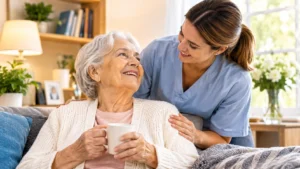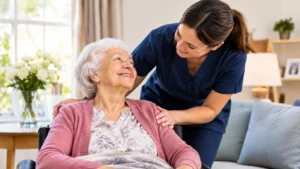

There’s no need to give up independence, to leave one’s comfort zone, or to give up all that makes life meaningful when aging. Seniors aging in place can provide an anchor of stability that will likely have a positive influence on a person’s emotional well-being and a sense of being grounded in the life they have built over decades. This includes the place one lives in, familiar routines and relationships, and typical daily choices.
The ability to remain in one’s community as long as they are able with minimal support. Aging in place within their communities may provide older adults with some relief from their physical and mental burdens, lessen loneliness, and enable older adults to feel more connected and engaged with their communities.
What Does Aging in Place Mean for Older Adults?

Aging in place is the ability to live in one’s own home, as opposed to an assisted living facility or nursing home. This concept lends itself well to older adults who want to maintain proximity to neighbors, friends, and the community and enjoy some assistance.
This does not mean that the senior has to do everything alone. He or she may have help with chores, transportation, errands, personal care, reminders about medication, and any number of other daily activities. Thanks to the help, the senior can remain in the home he or she loves without doing it all alone.
Aging in place recognizes that not only do older adults need their safety to be protected, but they need to feel nurtured and loved as well. When seniors are given the freedom to decide how they want to live, they will feel loved.
How Aging In Place Can Support Seniors’ Mental Health
A house can be more than a place to call home; a house can be full of many years of memories and connections, achievements, and your personal story. Remain in a house you feel secure in as you go through a brand new stage of life.
Here are a few ways that working from home might be able to improve your mental state.
1. Brings a Feeling of Freedom and Power
Another attribute that seniors put a high value on is independence. No matter how old you get, and especially if you’re a person with a lot of willpower, the feeling of independence is what keeps us feeling alive. For example, being able to decide if and when you want to get out of bed in the morning, whether to eat when you are hungry or spend the afternoon the way you would have always, etc.
Moving to another care setting may involve some alterations to routines or preferences. For some people, this can be an irritating change, like losing some of that control.
Deciding to grow old in your own house: You get to make lots of your day-to-day choices. Your carers can help you make decisions as you get older, not make the decisions for you.
This can give confidence, preserve dignity, and reassure the elderly that they can still participate in and influence their day-to-day existence.
2. Calms Your Stress with a Comforting Environment
During a time of instability, knowing where you’ll be able to call home can be reassuring. Seniors know where their belongings are; they know their surroundings; they know how the home is organized.
These minutiae may sound trivial, but they could make all the difference when it comes to an elder’s emotional well-being. An elder can benefit from the fact that the longer they can continue living on their own in familiar surroundings, the fewer adjustments they will have to make.
Recollections of pictures you’ve taken, make use of your preferred home furniture, heirlooms, and the noise of your normal noises in your house. Your memorabilia may help you come to feel a sense of place and decrease feelings of disorientation and solitude.
In dementia, the illusion of familiarity can be soothing for older adults with memory difficulties, but certain adaptations to the home and sufficient monitoring may be needed.
3. Helps to Keep You on Your Routine
Daily routines provide us with safety and certainty. Most older adults feel more comfortable when they can keep up their regular eating, resting, free time, exercise, and visiting schedules.
It’s also simpler to keep up these activities as the years go by at home. As a senior citizen, you can still enjoy your morning coffee or tea, tend to the garden, relax in your preferred chair to enjoy a great book, or enjoy your regular walk.
Looking forward to an activity every day can be an enjoyable experience. Instead of her days being ruled by her appointments or caregiver schedules, she can participate in an activity that she loves or bring back an activity that she used to love.
You can help by assisting with these routines in a way that is sensitive and supportive without disrupting the seniors’ routines.
4. Enhances a Sense of Self
Your house is a mirror of you, of your personality, your history, your achievements, and your aspirations. It is all the furniture, the clothes, the photographs, and the objects that surround you that inspire you, remind you of life, and give you your identity.
They can stay in the place they have created and cultivated over decades, simply aging in place. No need to start fresh. No need to leave beloved possessions behind or change completely and suddenly.
This type of connection may be especially important and comforting in the face of aging, retirement, the death of a spouse, and other profound life transitions.
They might help them remember the life they lived, their experiences, and their accomplishments. They can remind them that aging will not rob them of who they are.
Mental Health Benefits of Aging in Place
Mental Health: Aging in Place isn’t just about comfort and convenience—it’s about community. Remaining connected to what’s familiar opens doors to new joy and connection.
Some of the key benefits are
- Familiar surroundings and a change of pace could make seniors feel more at ease with the major life transitions they are experiencing.
- Increased independence: Having an increased say in everyday decisions can be empowering and boost self-esteem.
- Reduced feeling of loneliness: Being close to friends, family, and neighbors makes it easy to maintain friendly relations.
- An increased sense of belonging: Staying active and being involved in your community and interests.
- Easier aging at home: Help at home can ensure you make it through a transition without feeling a loss of independence.
These benefits aren’t given as a matter of program. Many senior citizens in the house could have clinical depression, anxiousness, solitude, or other mental health issues and also still require extra constant focus and also psychological assistance.
Emotional Health and Wellbeing for Older People
It’s great to have a home to feel comfortable in but just as important to have someone who takes notice of your mood and listens to you. The importance of a good company and relationships.
Family and caregivers can be instrumental in a positive environment by “doing the little things that count.”
1. Offering Consistent Company
You and your partner can make everyday life better. Sitting and talking whenever you want in the spontaneity of the moment. Going out for a meal or sharing a snack. Playing a game or watching a TV show together.
Prejudice will be insulted to the point where it’s hard to agree with.
2. Notice Mood Swings
For emotional symptoms in your loved one: You may experience some mood changes or disruptive behavior and/or sleep difficulties and loss of enjoyment in an activity.
As someone who is caring for him or her, recognize what this might appear like and also do not just dismiss it as “simply aging.”
Let’s say an older guy who loved to do his gardening used to cry inside when he looked out the window at his yard and saw all the work that needed to be done, and he absolutely hated it.
It is also helpful to have these in a patient-led way, and a referral to somebody that will come out and assess when needed will help to manage these before they become a concern.
3. Encouraging hobbies
A hobby is a source of amusement and pleasure; it gives meaning for your retirees to keep moving all through their retirement years. For those hobbies that are known to enhance both mental and physical well-being, they should be preserved to be maintained.
Some enjoyable options include:
- Gardening or caring for indoor plants.
- Reading books, newspapers, or magazines.
- Cooking familiar family recipes.
- Listening to music or learning a new skill.
- Painting, knitting, or completing puzzles.
- Spending time with pets when appropriate.
These types of fun activities can actually make aging out residents feel on top of the world and can also be a source of entertainment for the residents who have uneventful days.
Social Connection for Older Adults: Why It Matters
Stay socially connected to the world around you. No matter your age, social connection to other people is a major factor in your mental health. But more and more retirees, due to physical limitations and other circumstances, are no longer able to engage in social activities.
The platform offers a way to have a connection with the community and for support and engagement to reduce loneliness.
By staying in the same place as loved ones, seniors will be able to stay in touch with who they love as they get older. One other beneficial aspect of aging in place is that seniors can stay close to their children and grandchildren, old friends, and neighbors.
Some quick suggestions on bringing social interactions out into the field:
- Establish a weekly plan to call and visit the family.
- Arranging transportation for community gatherings.
- Getting involved in activities within your community and engaging with other older individuals.
- DTC: Motivate relatives to contact the family members by video call.
- Organizing shared meals and family celebrations.
- Assistance with religious/cultural/community services/activities as per the user’s interest.
It’s not the number of friends but the quality of friendship. A pleasant telephone call or visit or chat may be more satisfying than having a crowd of friends.
How to Build a Home Environment that Supports Emotional Health
The home setting that a senior lives in may influence their sense of ease and confidence when moving within their own home throughout the day. An environment that is safe, tidy and inviting can eliminate additional sources of stress of everyday living.
A few small changes can add up.
- Install grab bars, improve lighting, clear away loose items on the floor and ensure the frequently used items are easily accessible. When there are less tripping hazards in the house, the elderly will have no fear in walking from one point to another.
- Set up inviting spaces to gather: Place chairs and couches facing toward each other and spaced apart, so they’re comfortable for sitting as well as allowing room for family and visitors to move between.
- Keep familiar belongings. You might want to keep some familiar belongings to maintain some connection with your lives before. Visually present, close photographs, possessions, books and personal items can be comforting.
- Promote fresh air and light – let the sunshine in: Keep curtains open when it’s light outside, throughout the day. Good weather permitting, a garden, patio or outdoor space can help promote healthy habits.
- Create a specific area for leisure activities: Create a specific area for leisure activities like reading, knitting, puzzles, gardening etc. Having a specific area for leisure activities could be a factor in keeping up with them.
When You Might Need Help to Age in Place
There is no denying that being at home is the best decision but it isn’t always an appropriate answer without some modifications. As it is proven in the final years, elders will develop some or more of these conditions and will be in need of additional support.
When should families seek additional services for the older adult?
- Seldom gets along with others.
- Problems with house work or getting around to do things you need to do.
- Has difficulty remembering important daily tasks.
- Experiences frequent falls or mobility challenges.
- Loss of interest, or intense anxiety or depression that continues at a constant high level.
- Difficulty adhering to one’s own diet or usual schedule.
Families exploring aging in place support in Chandler can inquire about caregiving, transportation assistance, adult day care programs, home modifications, and healthcare providers offering in-home services to help seniors maintain their safety, comfort, and independence.
Conclusion
Living independently in later years can mean much more than just having the choice to stay in the house. It can sustain independence, bolster a person’s sense of self, maintain well-known routines, and provide occasions for social engagement-all of which can be protective for mental health and help provide older people with a sense of purpose.
But aging at home entails more than simply the comfort of a known street name. To grow old in their own homes, older adults require security, visits, help from relatives, and reliable support. Factoring in happiness as well as health can help families determine their long-term care options.
Soteria Lifestyle Concierge understands the importance of creating a caring environment where dignity, personal choice, and emotional well-being remain an essential part of everyday life. Contact us today to learn how our personalized care and companionship services can support seniors in maintaining comfort, independence, and a fulfilling lifestyle.
FAQs
What can be done to promote emotional health among seniors?
Gardening, reading, music, cookery, puzzles, walking, and family activities can all help you feel emotionally well. Try to choose a variety of activities for when you feel up to them.
What causes seniors to require additional home care?
Help an older person who finds it difficult to complete activities of daily living, is falling or nearly falling frequently, is withdrawn, or has a sudden change in mood or behavior. Check if your doctor or other health care professional requires some extra assistance.
How does staying in a familiar home benefit seniors emotionally?
Familiar surroundings can provide comfort, stability, and a sense of belonging. Being surrounded by personal belongings and cherished memories may help seniors feel more relaxed and secure.
What role does home care play in supporting senior mental health?
Home care providers can offer companionship, emotional support, and assistance with daily activities. Regular caregiver visits can encourage social interaction and help seniors maintain healthy routines.
What activities can support mental well-being for seniors aging in place?
Reading, gardening, listening to music, enjoying hobbies, spending time with loved ones, and participating in social activities can help seniors stay mentally engaged and emotionally connected.