

When living with a life-threatening illness, families are informed of the benefits of what is called palliative care, which is care intended to provide comfort, not a cure. Most people consider the services provided through palliative care and hospice care to be identical. However, these two forms of health services are meant to meet different needs at different times in the course of life, and with full understanding, they can be differentiated.
We know that an informed family can choose wisely during difficult times, and we have prepared this brief educational guide that will inform you of the commonalities, distinctions, advantages, and myths associated with these vital services.
Understanding Palliative Care
Palliative Care Care that is specific to those with severe or chronic illness. The focus of palliative care is to reduce pain, relieve symptoms, and enhance quality of life for the suffering individual, while the individual remains under treatment aimed at a cure or the control of the disease.
It is more flexible than hospice in when it can be started. It can be started even at the first stages of the illness. Patients can be offered chemotherapies, surgeries, dialysis, or whatever invasive procedures, along with pain management, counseling, and support.
The health care professionals providing palliative care work with the patient, family, and other health care professionals to facilitate a complete plan of care, adapted to meet the needs of each patient.
Who Can Receive Palliative Care?

Palliative care is available for individuals diagnosed with serious medical conditions, including:
- Cancer
- Heart disease
- Other pathogens that have been involved include elements of the common respiratory pathogens, e.g., chronic lung disease.
- Kidney failure
- Mental health disorders: Advanced neurological disorders
Must apply to patients of all ages and demand no specification of life expectancy.
Read More: What Are the 5 Stages of Palliative Care?
Understanding Hospice Care
Hospice care is for the person with an advanced disease who has a prognosis that is determined by his/her health care provider as being no longer responsive to treatment. There is a focus on providing comfort, dignity, and quality of life.
Hospice is not about prolonging life with aggressive therapies but providing comfort from pain and other distressing symptoms, guidance, encouragement, and support with emotional, spiritual, and familial difficulties.
Hospice care is frequently delivered in the patient’s residence, in an assisted living setting, convalescent or nursing home, or a hospice center.
Who Qualifies for Hospice?
Generally, hospice care is recommended when:
- A physician determines a prognosis of six months or less to live if the disease takes its normal course.
- Cure is no longer a relevant term.
- The patient has elected for comfort care.
- Pain management and quality of life become the main priorities.
While many associate hospice with the end of life, earlier enrollment can provide many other benefits.
Palliative Care vs Hospice: Understanding the Main Differences
Palliative Care vs Hospice, you will notice many distinctions in palliative care and hospice. Although they both focus on comfort and compassionate care, they serve different timeframes of severity and aim for various healthcare objectives.
| Feature | Palliative Care | Hospice Care |
| Purpose | Enhance quality of life while treating disease | To provide comfort during end-of-life care. |
| Treatment | Coexists with curative treatments, such as excision or cryoablation. | To direct the focus to comfort rather than trying to find a cure. |
| Eligibility | Any point during serious illness. | Death of a patient from a terminal illness with a prognosis of less than 2 years |
| Location | Is this aggregation-wise? Hospital, Other clinics and clinics, etc, homes, Nursing homes, and other similar institutions, etc. | Home, hospital, hospice, nursing home, assisted living |
| Care Team | Existing physicians’ specialist practitioners | While the main focus is on care of comfort, he was being cared for by a dedicated hospice team |
| Insurance Coverage | May be commonly paid for by Medicare, Medicaid, and private insurance | Commonly covered under hospice benefits |
Knowing the differences allows families to make decisions concerning care that will be most appropriate and desirable for the specific medical circumstances.
Benefits of Palliative Care

One of the main benefits of palliative care is that it affects the patient’s well-being during their entire medical course instead of merely the last stage of their life.
More experiences of improved symptom control, communication with healthcare professionals, and emotional well-being.
Physical Symptom Relief
Palliative specialists help manage:
- Chronic pain
- Fatigue
- Nausea
- Difficulty breathing
- Appetite loss
- Sleep disturbances
Proper treatment of symptoms enables patients to stay better without having to cut treatment.
Counselling and Psychological Services
A problem or illness that makes patients and their family feel high levels of anxiety and despair, or other related issues, can all take their toll on them.
Counselors, social workers, psychologists, and chaplains are part of the palliative care team working to help to deal with emotional problems and guide them through difficult.
Better Coordination of Care
Those seeing many doctors. Many patients and multiple specialists can be a very overwhelming experience.
Palliative care providers help all of your health care providers to communicate together, making sure a treatment plan that works is well implemented toward desired goals.
Advantages of Hospice Care
The facility also allows us to ensure that the patient continues to die with dignity, and will bring peace to the patient and comfort in this terminal part of life.
The families also receive various forms of guidance, education, and emotional support during the care.
Comprehensive Comfort Care
Hospice professionals carefully manage symptoms including:
- Pain
- Breathlessness(end of paragraph) At least 70% of Irish and Scottish patients suffer from at least mild breathlessness8. This is commonly accompanied by a cough at night, and is often associated with extra-thoracic problems such as chest wall deformity and obesity.8 The use of a Venturi mask with oxygen flow rates of up to 3 litres/min can alleviate this symptom. Fitting of a faraday cage or using an N95 mask may be of benefit.
- Anxiety
- Restlessness
- Nausea
- Insomnia
Provide the least amount of pain possible so that the patient’s comfort can be maximized.
Family Support Services
Also, at Hospice, we understand that significant illness impacts an entire family.
Services often include:
- Caregiver education
- Emotional counseling
- Spiritual guidance
- Respite care
- Support during bereavement following the death of a relative
Difference Between Hospice and Palliative Care
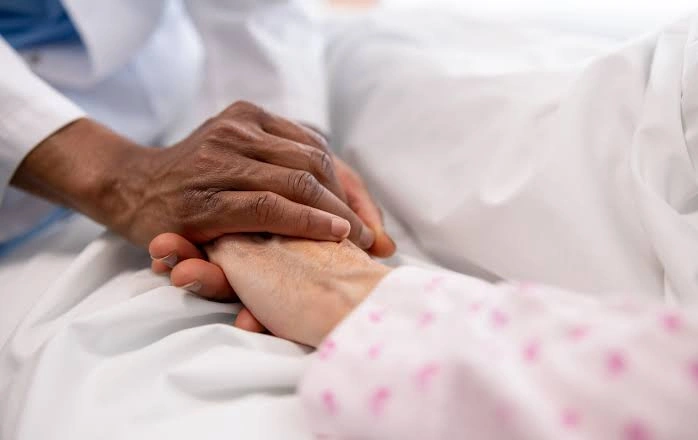
Both approaches emphasize patient comfort, but much anxiety regarding palliative and hospice care exists among family members of patients. This is a result of the similarity that exists in pain control, counselling, and communication. The key difference, however,r remains in the stage of thepatient’ss illness.
Palliative intervention can be started at any stage following a serious diagnosis and is provided alongside curative or definitive treatment. Hospice is indicated when curative treatment is no longer expected to be effective, and care is provided solely in a supportive capacity.
Treatment Goals
These two models of care have quite different aims.
With palliative care, the goal is to improve the patient’s comfort while the patient continues to receive some form of medical therapy; this could be chemo, dialysis, radiation, or operation. The patient is relieved of symptoms but does not abandon any therapy which might prolong or improve their lives.
Hospice provides care that shifts the emphasis from treatment of the disease to support of the end-of-life. Teams of healthcare and social service providers are able to focus their skills on pain management, symptom control, psychosocial support, and enabling patients to have quality time with loved ones during their last months.
Timing of Care
Another criterion of the two services is the starting time when it were starts.
The care can begin as soon as a serious diagnosis is made, whether the disease is new or has been present for years. Beginning care early can improve quality of life and assist patients in difficult treatment choices.
Starting early care often results in better quality of life and may assist patients when they have to make tough choices for medical treatment.
Misconceptions Often Raised for Hospice Care and Palliative Care
Myths and misconceptions frequently arise, and unfortunately, they tend to deter loved ones from using beneficial services. Here’s a good reference to make clear some of the confusing details.
Myth 1: Palliative Care Is Only for End-of-Life Patients
This is a complete misinterpretation of the question, as if there is just “one” “answer” (e.g., incorrect ER model).
Patients with any severe disease (including those on actively curative or controlling treatments) may need palliative care at any time. Frequently, patients will be in palliative care for prolonged periods of time.
Myth 2: Hospice Means Giving Up
One thing that I’ve noticed for people at this stage of treatment is the lack of hope. Hospice doesn’t mean losing hope.
Not everything has to happen the way medical personnel thought and felt, as they are, after all, human beings with their individual thoughts and feelings, for example, about their patient’s will.
Myth 3: These Services Replace Your Doctor
Palliative care or hospice won’t remove your health care team.
The specialists in palliative care will collaborate directly with your doctors, while the hospice staff will work with your health professionals to focus the care on both your wishes and your condition.
Myth 4: Only Cancer Patients Need These Services
While cancer patients are the most likely to receive supportive care, a significant number of patients with heart disease, dementia, kidney disease, Parkinson‘s disease, lung disease and other chronic illnesses also participate in supportive care programs.
How to Decide Which Type of Care Is Right
Choosing what support options to go for can be confusing, more so under these poor circumstances. The appropriate mode of intervention is guided by the patient’s condition, the aims of treatment, and the individual’s wishes.
Families should consider several important questions:
- Is the patient being maintained on drugs to cure or control the illness?
- Are the symptoms affecting your ability to enjoy your daily comfort and quality of life?
- What near misses has the healthcare practitioner noted?
Open conversations with doctors and loved ones can ease the uncertainty in difficult decisions and protect patients’ requested levels of care.
How Soteria Lifestyle Supports Families
Soteria Lifestyle Concierge knows that the experience of serious illness requires more than just medical choices. Families need kindness and support, reliable information and resources to ready themselves for all stages of care.
When a person is new to the world of hospice versus palliative care, or in search of what resources are available, having the correct facts can lower the stress associated with making a choice.
Offering education and person-centered care enables Soteria Lifestyle to enable people and carers to feel comfortable about asking questions of their health care team, to openly communicate with health care providers, and take part in making choices about the care plan best suited to the values, comfort, and overall well-being of the individual.
Final Thoughts
Supportive Care is perhaps the most Personal Medical Decision. “What is Supportive Care?”-both in palliative care and hospice settings- is vital to ensure families can make informed decisions about the degree of care that fits them best. Supportive Care in Palliative & Hospice Medicine: Unlike its cousin, palliative care is appropriate at any stage of a person’s illness, while hospice care centers around providing comfort in a person’s last days and months. Even so, like their counterparts, palliative care and hospice are interested in comfort, compassion, and the best management of symptoms. Contact Soteria Lifestyle Concierge today to learn how our compassionate care team can provide personalized supportive care services for your loved one and help your family navigate every step with confidence.
FAQs
What are the early signs of dementia?
Common early signs include memory loss, confusion, difficulty finding words, trouble completing familiar tasks, and changes in mood or behavior.
When should someone seek a professional evaluation for memory changes?
A professional evaluation should be sought as soon as noticeable memory changes, confusion, or changes in thinking begin to interfere with daily life.
Can dementia symptoms improve with treatment?
In some cases, symptoms caused by treatable medical conditions may improve. However, most forms of dementia are not reversible and require ongoing care and support.
Does early diagnosis help people with dementia?
Yes. Early diagnosis can help individuals access treatment sooner, plan for future care, manage symptoms, and maintain independence for as long as possible.
How can families support a loved one with dementia?
Families can help by creating a safe environment, maintaining routines, encouraging social interaction, attending medical appointments, and seeking professional care when needed.