
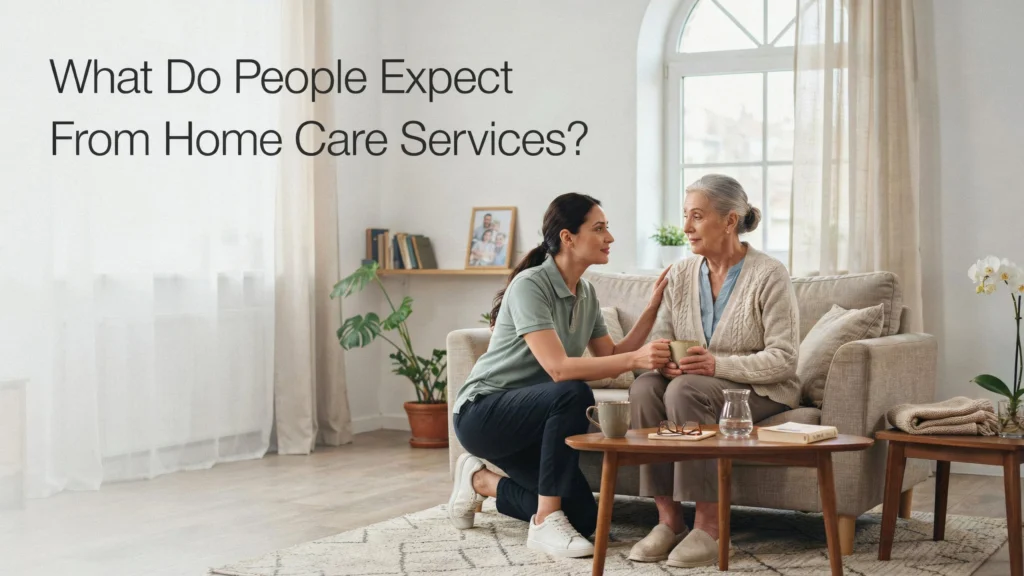
People expect home care to provide safe, respectful, and reliable help with daily life. They want caregivers who listen, follow routines, and treat loved ones with dignity. Families also want clear communication and dependable support when needs change.
So, what do people expect from home care services? Most people want care that feels personal, not rushed or one-size-fits-all. They expect trained caregivers, flexible schedules, help with daily tasks, and support that helps their loved one stay independent at home.
What Do People Expect From Home Care Services?

When families look for home care, they are not only buying hours of care. They are choosing someone who may spend important parts of the day with a loved one. People usually expect five basic things: quality care, trust, safety, reliability, and respect.
They also expect the service to fit the person’s needs. An older adult who needs help with meals may need very different support from someone who needs help with bathing and mobility.
Good home care starts by understanding those differences. Families should expect caregivers to follow an agreed care plan and respect personal choices. They should also know who to contact when questions or concerns arise.
Personalized Care That Fits Individual Needs
Personalized home care should be built around the person, not just a list of tasks.
Every client has different habits, preferences, abilities, and goals. One person may want help getting ready in the morning. Another may need help with meals, errands, and companionship.
A good care plan can include:
- Personal care needs
- Daily routines
- Meal preferences
- Mobility needs
- Household tasks
- Social activities
- Family communication
- Preferred care times
Personalized care also needs room to change. A person’s needs may increase or decrease over time. For example, a senior may first need help with meal preparation. Later, they may need help with dressing or walking safely. Regular care reviews can help keep the plan useful.
Compassionate and Respectful Caregivers
People expect caregivers to be kind, patient, and respectful. This matters because receiving personal help can feel uncomfortable for some people. Tasks such as bathing, dressing, and toileting involve privacy. A respectful caregiver explains what they are doing and gives the client choices whenever possible.
For example, instead of deciding what a client should wear, the caregiver can ask which outfit they prefer. Small choices can help people feel more in control. Good caregivers also listen. They notice preferences, concerns, and changes in mood or routine. Trust often grows through these simple daily interactions.
Help With Daily Activities
One of the main reasons people choose home care is to get help with everyday tasks. Depending on the provider and care plan, home care services may include:
- Bathing and shower assistance
- Dressing and grooming
- Toileting support
- Mobility assistance
- Meal preparation
- Light housekeeping
- Laundry
- Grocery shopping
- Errands
- Companionship
- Transportation support
- Respite for family caregivers
The goal is not to take over every task. A good caregiver helps with what the person cannot safely manage while encouraging them to do what they can. That balance can protect independence and confidence.
Safety and Peace of Mind at Home
Families expect home care to make daily life safer. Caregivers can support safe movement around the home and help reduce common risks. They may keep walkways clear, make sure needed items are within reach, and provide assistance during transfers or walking. They can also notice changes that deserve family attention.
For example, a caregiver may notice that a client is having more trouble walking than usual. That information can help the family decide whether to speak with the person’s healthcare provider. Caregivers do not replace medical professionals. Their role is to provide approved support and report concerns through the proper channels. For families, knowing someone is checking in can also provide peace of mind.
Reliable and Consistent Care
Reliability is one of the biggest expectations families have. People expect caregivers to arrive on time, follow the care plan, and complete agreed tasks. They also want a clear process when a caregiver cannot make a scheduled visit. Consistent caregivers can be helpful because clients do not have to explain their routines again and again.
Families should ask providers about backup coverage before starting care.
Useful questions include:
- What happens if a caregiver calls out?
- Is there a backup caregiver?
- How are schedule changes handled?
- Who contacts the family?
- How are care concerns reported?
A dependable system helps prevent avoidable stress.
Communication With Families
Families expect honest and timely communication. They should know how to reach the care team and what type of updates they can expect. This becomes especially important when a loved one’s needs change.
Communication may include updates about:
- Changes in daily routines
- Missed meals
- Mobility concerns
- Mood changes
- Changes in personal care needs
- Safety concerns
- New family requests
Clear communication also means being honest about what caregivers can and cannot do. Families should never have to guess whether a service is included in their care plan.
Flexibility in Care Schedules
People’s needs do not always fit a fixed schedule. Some clients may need only a few hours of help each week. Others may need daily visits, overnight support, or longer shifts.
Depending on the provider, care may be available as:
- Part-time care
- Daily care
- Weekend care
- Overnight care
- Respite care
- Extended shifts
- 24-hour care
Flexibility is also useful when needs change. A person may need more help after an illness or hospital stay. Later, their schedule may return to a lower level of support. Families should ask whether the provider can adjust care hours when circumstances change.
Support for Independence
Many people choose home care because they want to remain at home. That does not mean they want someone to do everything for them. The best support encourages independence while providing help where it is needed.
For example, a caregiver may prepare a meal but allow the client to choose what they want to eat. They may help with dressing while allowing the client to complete the parts they can manage safely.
This approach supports dignity and personal choice. Home care should add support to a person’s life, not remove their sense of control.
Professional and Well-Trained Caregivers
Families expect caregivers to have the skills needed for their assigned duties. They also want providers to take caregiver screening seriously.
Before choosing a provider, families can ask about:
- Background checks
- Reference checks
- Caregiver training
- Experience with older adults
- Supervision
- Insurance
- Ongoing support
- Caregiver matching
Training needs can vary based on the type of care provided. For example, a caregiver supporting someone with limited mobility may need experience with safe transfers and mobility assistance. Families should choose a provider that is clear about caregiver qualifications and service limits.
What Families Should Expect From a Home Care Provider
A home care provider should explain its services before care begins. Families should receive clear information about the care plan, schedule, rates, cancellation rules, and communication process. They should also understand who is responsible for different parts of care.
A provider should not promise services that caregivers are not trained or authorized to provide. Clear expectations protect both the client and the care team. Families should also expect a provider to listen when something is not working. A care plan may need changes as the person’s needs develop.
What Home Care Services May Not Include
Home care does not always mean medical care. Non-medical home care often focuses on personal support, companionship, household tasks, meals, mobility assistance, and other daily needs. Skilled medical services are different. They may require licensed healthcare professionals and a separate care plan.
A caregiver may remind a client to take medication when allowed by the provider and local rules. That does not mean the caregiver can prescribe medication, change doses, or make medical decisions. Service limits vary, so families should ask exactly what a provider offers. Understanding these limits prevents confusion and helps families choose the right type of care.
How to Know If a Home Care Service Is Meeting Expectations
After care begins, families should look at how the service is working in real life. Signs that care is meeting expectations may include:
- The caregiver follows the care plan.
- The client feels respected.
- Daily tasks are handled properly.
- Communication is clear.
- The caregiver arrives as scheduled.
- Family concerns receive a timely response.
- The client remains involved in daily decisions.
- Care changes when needs change.
The client’s experience matters most.
A service can look good on paper but still be a poor fit if the client feels uncomfortable or ignored. Families should speak up early when something needs to change.
Why Expectations Matter in Home Care
Clear expectations help everyone understand what good care should look like. They reduce misunderstandings between families, clients, caregivers, and providers. They also make it easier to identify problems before they become larger concerns.
For example, if a family expects daily updates but the provider only gives weekly updates, both sides may become frustrated. That issue can often be solved by discussing communication expectations before care begins. Clear expectations also help families compare providers fairly. Instead of choosing based only on price, they can look at caregiver quality, services, communication, flexibility, and the overall care experience.
How to Choose Home Care That Meets Your Expectations
Start by identifying what your loved one needs help with. Write down the tasks that are difficult, the times support is needed, and any personal preferences that matter. Then compare providers based on the quality of their services. If you are looking for a Personal care service in Chandler, ask about caregiver screening, care plans, scheduling, communication, and backup coverage.
Soteria LifeStyle Concierge provides personalized support focused on comfort, dignity, and everyday needs. When comparing providers, families should look for a care team that listens and builds support around the individual.
Price matters, but it should not be the only factor. A lower rate may not provide the same schedule, caregiver experience, communication, or support that your family needs. Before making a decision, ask for a clear explanation of services and costs.
What Questions Should You Ask Before Starting Home Care?
A few simple questions can make the decision easier.
Ask:
- What services are included?
- How do you create the care plan?
- How do you screen caregivers?
- Can I meet the caregiver before care starts?
- What happens if the caregiver is unavailable?
- Can care hours change later?
- How do you communicate with families?
- What are your rates and minimum hours?
- Are there additional fees?
- Who should I contact if I have a concern?
The answers can tell you a lot about how a provider works.
Conclusion
So, what do people expect from home care services? They expect care that is safe, respectful, reliable, personal, and easy to understand. Families want caregivers who help with daily needs without taking away independence. They also want honest communication, flexible schedules, trained caregivers, and clear service expectations. The right home care plan should fit the person, not force the person to fit the plan.
When families take time to compare providers and ask the right questions, they can make a more confident care decision. If your loved one needs support at home, contact us today to discuss personalized care options that fit your family’s needs.
FAQs
What do people expect from home care services?
What do people expect from home care services? Most people expect safe, respectful, reliable, and personalized support. They also want help with daily tasks, clear family communication, flexible scheduling, and caregivers they can trust.
What makes a good home care service?
A good home care service provides dependable caregivers, personalized support, clear communication, flexible scheduling, and respect for the client’s choices and dignity.
What should a caregiver do for a client at home?
A caregiver may help with approved daily activities such as bathing, dressing, grooming, meals, mobility, light housekeeping, errands, and companionship. Services depend on the care plan and provider.
Can home care services be customized?
Yes. Many providers create care plans based on a person’s daily needs, preferences, schedule, and goals. Care can also be adjusted as needs change.
How do I know if my loved one needs home care?
Signs may include difficulty with bathing, dressing, meals, mobility, household tasks, errands, or staying safely alone. Changes in routine may also suggest that extra support is needed.
Can home care be provided 24 hours a day?
Some providers offer 24-hour or extended care. Availability, staffing, schedules, and costs vary, so families should ask each provider about its options.
How involved should family members be in home care?
Family involvement depends on the person’s needs and preferences. Families can help with care planning, communication, appointments, and monitoring changes while caregivers handle agreed daily tasks.
What questions should I ask before hiring a home care provider?
Ask about services, caregiver screening, training, rates, schedules, backup coverage, care plans, communication, cancellation rules, and how concerns are handled.