
When a loved one needs help, choosing the right caregiver can feel confusing. Families may wonder what type of support is best for their needs.
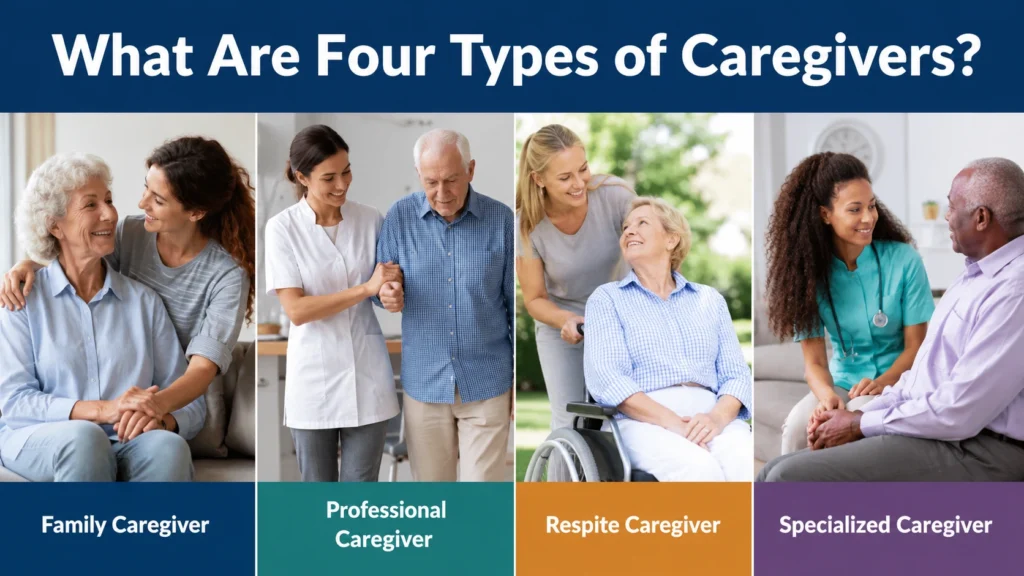
What Are Four Types of Caregivers? The four common types are family caregivers, professional caregivers, personal caregivers, and specialized caregivers. Each type offers different support based on a person’s health, daily routine, and level of independence.
Family Caregivers

Family caregivers are relatives or close loved ones who provide care without working as a paid caregiver. A spouse, adult child, sibling, or other family member may take this role.
Family caregiving often begins when an older adult starts having trouble with daily tasks. The family may notice changes in mobility, memory, personal hygiene, or medication routines. They may then step in to provide regular help.
Common family caregiver tasks include:
- Preparing simple meals
- Helping with household chores
- Providing transportation
- Attending medical appointments
- Offering emotional support
- Helping with daily routines
- Supporting safe movement around the home
- Managing some care-related tasks
Family caregivers often know the person’s habits and preferences very well. This can make care feel comfortable and familiar.
However, family caregiving can become difficult when needs increase. A family member may have work, children, health needs, or other responsibilities. Providing care every day can also lead to stress and fatigue.
A family caregiver does not have to handle everything alone. Professional support can give families needed relief while allowing them to remain involved in their loved one’s life.
Professional Caregivers
Professional caregivers provide paid care as part of their work. They may work for a home care agency, care company, assisted living setting, or another care provider.
Professional caregivers can help older adults remain safe and comfortable while supporting independence. Their duties depend on their training, the client’s needs, and the services arranged with the care provider.
A professional caregiver may help with:
- Personal hygiene
- Dressing and grooming
- Meal preparation
- Light housekeeping
- Companionship
- Walking and mobility support
- Errands and shopping
- Transportation
- Daily routines
- Family communication
The level of care should always match the caregiver’s training and the client’s needs.
For example, a person who needs help getting dressed may need personal care support. Someone who mainly feels lonely may benefit from companionship and social activities.
Professional care can also provide consistency. Families can arrange care around specific hours instead of trying to provide every task themselves.
It is important to understand that not every caregiver can perform medical tasks. Medication administration, wound care, injections, and other clinical services may require licensed healthcare professionals.
Personal Caregivers
Personal caregivers focus on hands-on help with everyday personal needs. This type of support can be important when an older adult wants to remain at home but has difficulty managing certain activities alone. Personal care may include assistance with bathing, dressing, grooming, toileting, eating, and safe movement. The exact duties depend on the person’s needs and the care plan.
For example, consider an older adult who can walk independently but struggles with bathing. A personal caregiver may provide support during the bathing routine while allowing the person to do as much as possible alone.
That balance matters. Good care should support independence rather than take away every task a person can still manage. Personal caregivers may also provide help with simple daily routines. This can include preparing meals, helping with clothing, keeping commonly used areas tidy, and supporting safe movement.
Families should discuss these duties before care begins. Clear expectations help everyone understand what support will be provided. Personal care is also different from medical care. A caregiver may assist with daily living, while a nurse or other licensed professional handles clinical needs.
Specialized Caregivers
Specialized caregivers provide support for people with particular conditions, needs, or situations. Their experience may be especially useful when ordinary daily assistance is not enough.
Specialized care can involve areas such as:
- Dementia and memory support
- Parkinson’s disease
- Stroke recovery support
- Mobility assistance
- Post-hospital support
- Respite care
- End-of-life comfort support
- Care for people with complex daily needs
For example, a person with dementia may need more than help with meals and dressing. They may need a calm routine, close observation, simple communication, and support during periods of confusion. A specialized caregiver should understand the person’s condition and know when a concern needs to be reported to the family or healthcare team.
Specialized care does not mean every caregiver has the same training. Families should ask about experience, training, background checks, and the exact duties included before starting services.
How Do You Choose the Right Type of Caregiver?
Understanding What Are Four Types of Caregivers? is only the first step. The right choice depends on the person’s actual needs. Start by asking what help is needed today. Then think about how those needs may change over time.
Consider these questions:
Does the person need companionship?
A companion-focused caregiver may be enough when the main concern is loneliness or limited social activity.
Does the person need help with personal tasks?
Personal care may be appropriate when bathing, dressing, grooming, or mobility becomes difficult.
Does the person have a specific health condition?
Specialized support may be useful when dementia, stroke recovery, Parkinson’s, or another condition affects daily life.
Can the family provide regular care?
If family members have demanding schedules, professional care may provide needed support.
How many hours of care are needed?
Some families need a few hours each week. Others need more regular support.
Does the person want to remain at home?
In-home care can help older adults receive support in familiar surroundings.
The goal is not to choose the most intensive option. The goal is to choose care that safely meets the person’s needs while preserving dignity and independence.
Family Caregiver vs. Professional Caregiver
Family and professional caregivers can both play important roles, but they serve different purposes. A family caregiver usually provides unpaid support because of a close personal relationship. A professional caregiver provides paid services according to an agreed care plan. Family caregivers often bring strong personal knowledge. They know the person’s history, preferences, routines, and personality.
Professional caregivers bring work experience, scheduled availability, and care skills that can support the family. The two can work together.
For example, an adult daughter may handle medical appointments and family decisions. A professional caregiver may provide several hours of in-home support during the week. This arrangement can reduce pressure on the family while keeping relatives closely involved.
Benefits of Having the Right Caregiver
The right caregiver can make daily life easier for both the older adult and the family.
Greater Independence
Appropriate support allows a person to complete tasks safely while still doing what they can for themselves.
Better Daily Comfort
Help with meals, hygiene, mobility, and routines can make everyday activities less stressful.
More Social Connection
Companionship can reduce isolation. A caregiver may talk with the person, play games, read together, or help them take part in activities.
Family Peace of Mind
Families can feel more comfortable knowing that someone is available to provide regular support.
Support for Changing Needs
Care needs can change after an illness, injury, or decline in mobility. A flexible care plan can adjust as needs change.
When Should You Consider Professional Care?
Families should consider professional care when daily responsibilities become difficult to manage safely. Warning signs can include missed meals, poor personal hygiene, frequent falls, increasing isolation, difficulty managing routines, or family caregiver burnout.
A sudden change should not automatically be treated as a normal part of aging. New confusion, weakness, falls, or other concerning symptoms should be discussed with an appropriate healthcare professional. Professional home care can also be helpful after a hospital stay. A person may feel better but still need assistance with everyday activities.
Respite care is another reason families seek professional support. A family caregiver may need time to work, rest, attend appointments, or handle personal responsibilities. The earlier families discuss available support, the easier it can be to create a practical plan.
How Soteria Lifestyle Can Help
Understanding What Are Four Types of Caregivers? can help families start the right conversation about care. The next step is finding support that matches the person’s daily needs. Soteria LifeStyle provides personalized in-home support designed around each client’s routine, preferences, and goals. Care plans can focus on companionship, daily assistance, personal support, and other non-medical needs. Families looking for Personal care services can discuss their loved one’s needs, preferred schedule, and level of assistance before services begin. A good care plan should never treat every person the same. An older adult who needs help with bathing may have very different needs from someone who mainly needs companionship or help with errands.
Soteria LifeStyle Concierge focuses on respectful support that helps clients remain comfortable, engaged, and as independent as possible at home. If you are unsure which type of caregiver is appropriate, contact Soteria LifeStyle to discuss your situation and explore suitable care options.
Conclusion
So, What Are Four Types of Caregivers? The four broad types are family caregivers, professional caregivers, personal caregivers, and specialized caregivers. Each type serves a different purpose. Family caregivers provide personal support based on a close relationship. Professional caregivers offer paid assistance. Personal caregivers focus on everyday personal needs. Specialized caregivers support people with specific conditions or care needs.
The best choice depends on the person’s health, daily routine, safety, preferences, and family situation. Care should also be reviewed as needs change. The right support can protect independence, improve daily comfort, and give families greater peace of mind. Contact Soteria LifeStyle Concierge today to discuss your loved one’s care needs and find the right support.
FAQs
What are the four types of caregivers?
What Are Four Types of Caregivers? The four broad categories are family caregivers, professional caregivers, personal caregivers, and specialized caregivers. The roles can overlap depending on a person’s needs and the services provided.
What is the most common type of caregiver?
Family caregivers are very common because relatives often provide unpaid support to older parents, spouses, or other loved ones. Professional caregivers are also widely used when families need regular outside help.
What does a professional caregiver do?
A professional caregiver may provide companionship, meal preparation, light household help, personal care, mobility support, errands, and other non-medical assistance. Duties depend on the care plan and caregiver training.
What is the difference between a caregiver and a personal caregiver?
A caregiver is a broad term for someone who provides care or support. A personal caregiver usually focuses more on hands-on help with activities such as bathing, dressing, grooming, toileting, and mobility.
When should an elderly person have a caregiver?
A caregiver may be helpful when an older adult struggles with daily activities, personal care, mobility, meals, household tasks, or social connection. Professional support can also help when family caregivers feel overwhelmed.
Can a family caregiver and professional caregiver work together?
Yes. Many families use both. A relative may manage family decisions and appointments while a professional caregiver provides regular in-home support.
How do I know which caregiver is right for my loved one?
Start with the person’s daily needs. Consider personal care, mobility, companionship, medical conditions, safety, schedule, and the amount of family support available. A care provider can also help identify suitable services.