

Families researching senior care options often encounter two terms that sound similar but are not interchangeable. Dementia care and memory care both address memory loss, yet they describe different things. Understanding the distinction helps families choose the right level of support with more confidence.
So what is the difference between memory care and dementia care? Dementia care refers to the type of support a person receives, while memory care refers to the specific setting built to provide that support.
Understanding Dementia Care
Dementia care is not limited to a single building or program. It refers to any support given to someone living with dementia, regardless of where that support takes place. This can occur at home, within assisted living, or inside a dedicated memory care community.
Dementia affects memory, judgment, and communication, often all at once, and the level of care required tends to track with how advanced the condition has become. In earlier stages, occasional reminders and light supervision may be sufficient. In later stages, support with nearly every daily task becomes necessary.
Dementia care, in short, describes a category of support rather than a physical location.
Common forms of dementia care include in-home caregiving, adult day programs, assisted living with added support, and memory care communities. Each option provides a different level of supervision, and many families move between them as needs change. Support that begins with a few hours a week can expand into full-time care as the condition progresses.
What Is Memory Care?

Memory care is a specific type of senior living designed exclusively for individuals with dementia, Alzheimer’s, or related memory conditions. It combines housing, supervision, and daily support within one dedicated environment.
Memory care communities are designed with safety as a priority. Entry and exit points are secured to prevent wandering, and staff receive dedicated training in dementia behavior, communication, and emergency response. Daily routines remain consistent, which helps reduce confusion and anxiety among residents.
Soteria Life Style Concierge provides memory care in Phoenix built on this approach, combining structured routines with a secure, well-supported environment.
Read More: How to Move a Parent with Dementia to Assisted Living?
Memory Care vs Dementia Care: Are They the Same?
Is memory care the same as dementia care? Not quite. Memory care is one method of delivering dementia care, but it is not the only method. Dementia care can be provided at home, in assisted living, or within a memory care community. Memory care refers to the exact setting designed to manage advanced dementia needs safely.
Key Differences Between Dementia Care and Memory Care
The difference between dementia care and memory care comes down to scope and setting. Dementia care functions as the broader term, covering any support connected to a dementia diagnosis. Memory care is one specific option within that broader category, distinguished by added safety measures and specialized staff.
Several distinctions stand out in practice:
- Dementia care can take place in a person’s own home, while memory care is only available within a licensed community
- Dementia care staff may hold general caregiving training, while memory care staff receive dementia-specific training
- Dementia care arrangements vary considerably depending on the provider, while memory care programs follow structured daily routines
- Dementia care environments at home typically lack secure exits, while memory care communities are purposefully designed to prevent wandering
Memory care vs dementia care ultimately comes down to how much structure and oversight a person currently requires. Early-stage dementia may only call for occasional check-ins, while advanced dementia often requires the continuous structure that a memory care community provides.
When to Transition to Memory Care
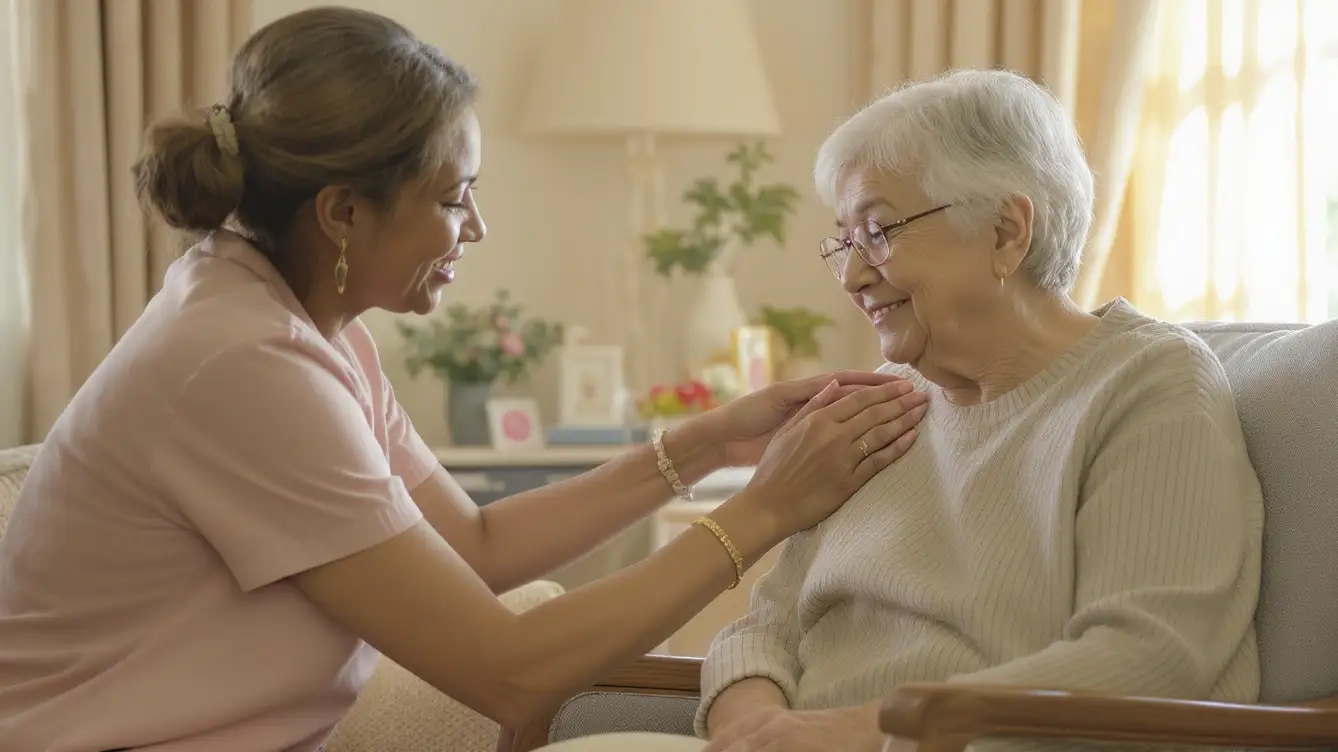
Families frequently wait longer than necessary before considering memory care. Indicators that a transition may be appropriate include frequent wandering, falls, missed meals, or a caregiver showing clear signs of exhaustion.
Memory care compared to dementia care at home offers more consistent supervision, since trained staff remain present at all times. This distinction becomes most significant once safety shifts from an occasional concern to a daily one. Many families recognize this turning point once existing arrangements can no longer keep pace with the level of care required.
The Role of Environment in Memory Care
The environment plays a more significant role in memory care than many families initially expect. Simplified layouts, clear signage, and consistent routines help residents feel more secure and less disoriented. Outdoor spaces are typically enclosed, allowing residents to move safely without the risk of wandering off.
Lighting, noise levels, and interior design are selected with dementia symptoms in mind rather than aesthetics alone. A calm, predictable environment can reduce agitation and support healthier sleep patterns and daily functioning.
Many memory care communities also incorporate visual cues, such as labeled doors or personal photographs, to help residents navigate their surroundings independently. These design details often carry more weight than families anticipate before touring a community in person.
Common Misconceptions About Memory Care and Dementia Care
One frequent misconception is that memory care and dementia care mean the same thing, which creates confusion when families begin comparing options. Another is the assumption that memory care applies only to the final stage of dementia, when in fact many communities support residents across early and middle stages as well.
Cost is another area of misunderstanding. Memory care typically costs more than standard assisted living due to specialized staffing and secure design, yet it can still cost less than full-time in-home dementia care once around-the-clock supervision becomes necessary.
Some families also assume dementia care and memory care require the same degree of medical involvement. In practice, both focus primarily on daily support and safety, with medical professionals involved as needed rather than as the central component of care.
Choosing the Right Care Option

Selecting between home-based dementia care and a memory care community depends on a few key considerations. How much supervision does the individual currently require? Has safety become a daily concern rather than an occasional one? Can family members or in-home caregivers sustain this level of support over the long term?
Visiting several communities in person is one of the most useful steps a family can take. Ask about staff training, caregiver-to-resident ratios, daily programming, and how the community responds to behavioral changes.
Memory care compared to dementia care at home also tends to provide greater social engagement, since residents share meals, activities, and common areas with peers facing similar circumstances. For many families, this social element carries as much weight as safety considerations.
Conclusion
Dementia care and memory care are related but distinct concepts. Dementia care describes the support itself, while memory care describes a secure, structured setting designed to deliver that support. Understanding the difference between dementia care and memory care allows families to select the appropriate level of care at the right time. Soteria Life Style Concierge offers memory care in Phoenix designed to keep residents safe, comfortable, and well supported. Contact Soteria Life Style Concierge today to learn more about our memory care community and how we can support your family.
FAQs
What is the difference between memory care and dementia care?
Dementia care refers to the support provided to someone with dementia, while memory care refers to a specific setting designed to deliver that support safely.
Is memory care the same as dementia care?
No. Memory care is one method of delivering dementia care, distinguished by added safety features and specially trained staff.
When should a family consider memory care instead of home care?
Memory care becomes worth considering when safety concerns increase, such as wandering, falls, or missed medications, or when a home caregiver becomes overwhelmed.
Does memory care cost more than dementia care at home?
It depends. Memory care often costs more than basic assisted living but can cost less than full-time in-home dementia care over time.